
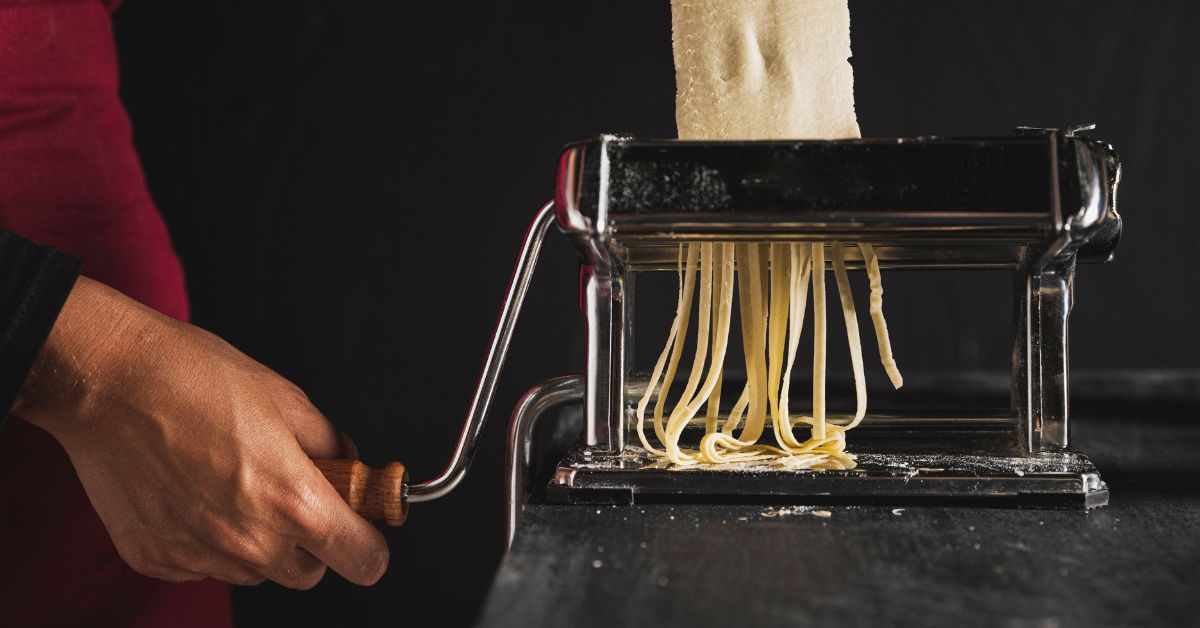
Tortellinatrice: The Complete Expert Guide for Professional Tortellini Production
If you’re searching for a tortellinatrice, you likely have one goal: produce high-quality tortellini faster, more consistently, and with less manual labor. Whether you’re running an artisan pasta lab or scaling industrial production, choosing the right machine can dramatically impact efficiency, waste levels, and long-term profitability.
I’ve worked with both small pasta ateliers and mid-sized manufacturing facilities, and one thing is consistent across the board — the difference between hand-folded tortellini and machine-formed tortellini is not just about speed. It’s about precision, repeatability, and operational stability.
Before we dive deep, here’s what matters most.
What Is a Tortellinatrice?
A tortellinatrice is a specialized pasta machine designed specifically to shape and seal stuffed pasta, particularly tortellini. Unlike general pasta extruders or sheeters, this machine integrates dough feeding, filling injection, forming, and sealing into one synchronized process.
At its core, the machine performs three key tasks: it sheets the dough to the correct thickness, deposits filling with precise weight control, and folds the pasta into its characteristic ring shape while sealing it securely.
The geometry involved in shaping tortellini is surprisingly complex. The fold must be tight enough to seal but gentle enough to preserve the structure of the dough. High-quality machines achieve this through calibrated molds and pressure systems.
How a Tortellinatrice Works
Understanding how the machine functions will help you avoid costly mistakes.
Dough Preparation and Feeding
Dough consistency is the foundation of successful operation. In professional settings, hydration typically ranges between 30–32%, depending on flour protein levels and ambient humidity.
In my experience, most operational problems stem from dough inconsistencies rather than mechanical issues. If the dough is too dry, seals crack. If too wet, the tortellini lose shape during forming.
Modern machines use adjustable rollers to achieve thickness between 0.6 and 0.8 mm, which is ideal for traditional tortellini.
Filling Injection System
The filling unit uses piston-driven or volumetric dosing systems to ensure consistent portioning. Precision matters. Even a 0.3-gram variance can affect structural integrity and perceived product quality.
Industrial models allow fine-tuning of injection pressure and volume. When properly calibrated, tolerance levels can stay within ±0.2 grams.
A 2024 FoodTech Europe manufacturing report found that precise filling calibration reduces waste in stuffed pasta production by up to 18%.
Molding and Sealing Mechanism
The shaping unit folds the dough around the filling and seals it using compression molds. Bronze dies are often preferred because they create a slightly rough surface texture, which helps sauce adherence.
Pressure settings must align with dough elasticity. Excess pressure leads to tearing, while insufficient pressure creates open seams.
Types of Tortellinatrice Machines
The right model depends largely on production goals and budget.
Manual Models
Manual tortellinatrici are ideal for small pasta labs or specialty restaurants. They typically produce between 8 and 15 kilograms per hour.
These machines are affordable and compact, but they rely heavily on operator consistency. They are best suited for businesses prioritizing artisanal production over volume.
Semi-Automatic Machines
Semi-automatic models represent a practical middle ground. Output generally ranges from 20 to 50 kilograms per hour.
From what I’ve observed in growing pasta businesses, this category often delivers the best balance between cost and scalability. It allows moderate automation while still maintaining production flexibility.
Fully Automatic and Industrial Systems
Industrial tortellinatrice systems are built for continuous production environments. Capacities range from 40 to more than 150 kilograms per hour.
These machines often integrate with complete pasta production lines, including cooling tunnels and packaging systems. They feature PLC control panels, automated synchronization, and advanced safety systems.
For food safety compliance, manufacturers typically follow standards outlined by the U.S. Food & Drug Administration (FDA) and the European Food Safety Authority (EFSA). These organizations provide regulatory frameworks that industrial operators must meet.
Cost and Investment Considerations
The cost of a tortellinatrice varies widely.
Manual machines typically range from $2,000 to $8,000.
Semi-automatic systems often fall between $12,000 and $35,000.
Industrial units can exceed $180,000 depending on configuration.
Note: The costs outlined here are intended as a general guide to give you an idea of the market range. Actual prices may vary based on your specific requirements and current provider rates.
However, purchase price alone doesn’t determine value. Labor reduction plays a major role in return on investment.
For example, three employees forming tortellini manually at $18 per hour over an eight-hour shift cost $432 daily. Over a 22-day production month, that equals $9,504.
A semi-automatic system can reduce labor needs by nearly half. In many cases, businesses achieve ROI within one year.
Common Operational Errors
Incorrect dough thickness is one of the most frequent issues. Tortellini require thin sheets, and even small deviations can disrupt folding geometry.
Overfilling is another common mistake. Excess filling causes rupture during shaping and increases product waste.
Poor sanitation is a risk that cannot be ignored. Residue buildup not only compromises food safety but also accelerates mechanical wear.
Maintenance and Longevity
A tortellinatrice operates under continuous mechanical stress. Preventive maintenance ensures long service life.
Daily cleaning should be thorough, especially in filling channels and sealing molds. Weekly inspections should focus on roller alignment and pressure systems.
With proper care, most commercial machines operate efficiently for 10 to 15 years.
For food safety protocols, many producers follow guidance published by the World Health Organization (WHO), particularly in hygiene management.
Hygiene and Regulatory Compliance
HACCP implementation is essential in any commercial pasta operation. Machines should be constructed from AISI 304 or 316 stainless steel and allow tool-free disassembly for cleaning.
Allergen control procedures are especially important when switching between fillings, such as meat-based and dairy-based mixtures.
Failure to maintain compliance can lead to costly shutdowns.
Choosing the Right Tortellinatrice
When evaluating options, consider your projected growth over the next three to five years. Underestimating production capacity often leads to premature upgrades.
Ask yourself how much you produce daily, what fillings you intend to use, and whether expansion into retail or export markets is planned.
In many cases, investing slightly above current needs proves more cost-effective in the long run.
Final Thoughts: Is a Tortellinatrice Worth It?
If your daily production exceeds 15 to 20 kilograms, a tortellinatrice is rarely a luxury. It becomes a strategic necessity.
The real advantage lies in consistent weight control, uniform sealing, and scalable output. When combined with disciplined maintenance and proper calibration, the machine becomes a long-term asset rather than a short-term expense.
Start by calculating labor costs and production targets. Then evaluate models based on capacity, mold versatility, and hygiene design — not just price.
The right choice will support your business for the next decade.
Frequently Asked Questions
What production capacity should I choose?
Select a machine that covers peak demand rather than average demand. It’s safer to operate below maximum capacity than constantly push the machine to its limit.
Can tortellinatrici handle different fillings?
Most modern systems accommodate meat, cheese, and vegetable fillings. Thicker fillings require stronger injection systems and careful calibration.
How often should the machine be serviced?
Daily cleaning is mandatory. Professional servicing is recommended annually to maintain performance and safety standards.
Is a tortellinatrice suitable for small restaurants?
Yes. Compact manual or semi-automatic models work well for restaurants that produce fresh pasta in-house.
How long does a tortellinatrice last?
With consistent maintenance, commercial machines typically operate effectively for 10–15 years.