
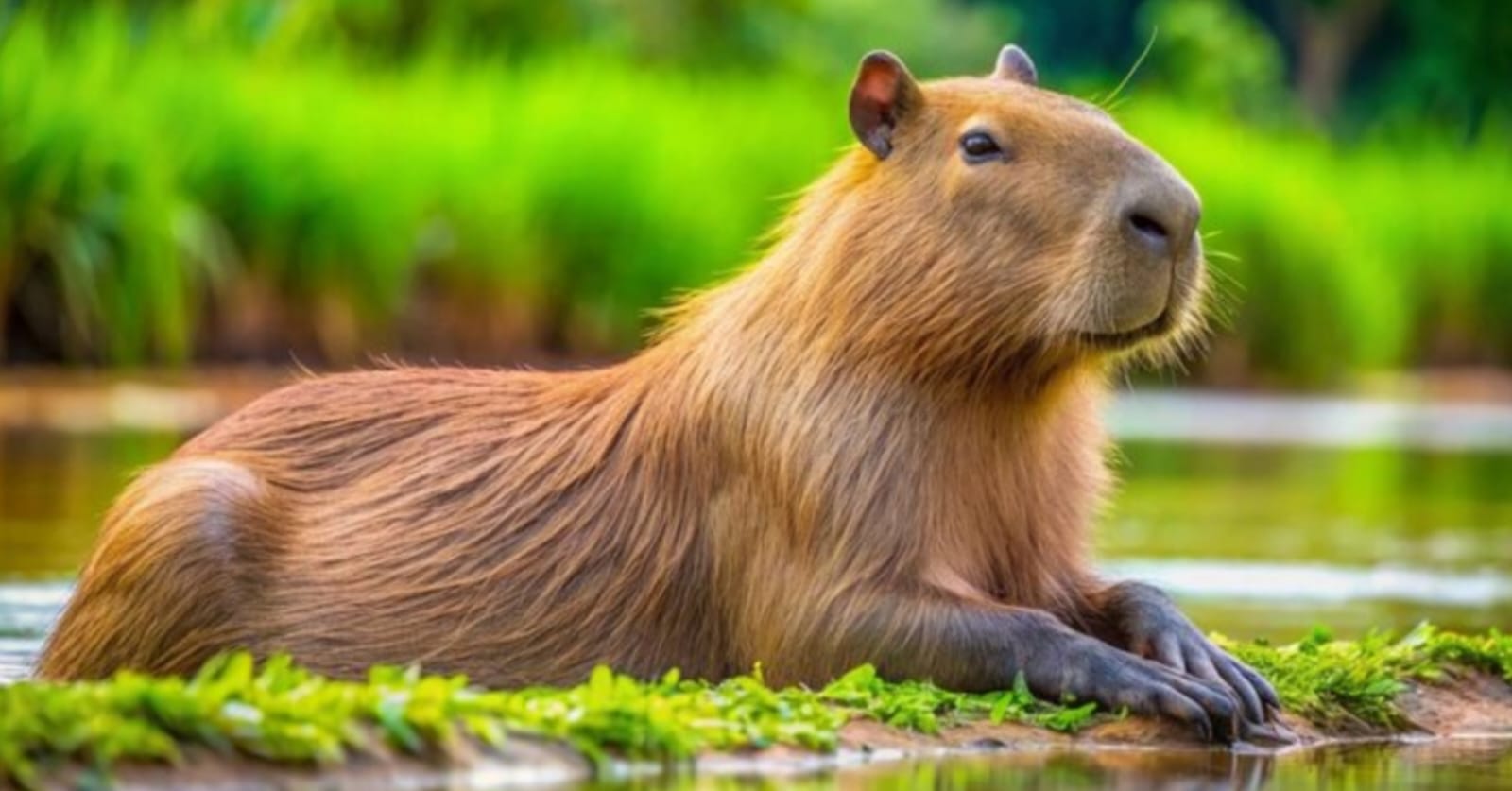
Cadibara: The Gentle Giant of South America
The Cadibara is the largest rodent in the world, yet it is known for its remarkably calm and sociable nature. Despite its size, this semi-aquatic animal moves through its environment with grace and intelligence, adapting equally well to both land and water. Native to South America, the Cadibara thrives in wetlands, riversides, and tropical grasslands, where it spends much of its day grazing, resting, and interacting with its group.
Unlike many large mammals, the Cadibara combines strength with gentleness. Its body is perfectly adapted for a semi-aquatic lifestyle: partially webbed toes, keen senses, and strong swimming abilities allow it to escape predators quickly and navigate diverse terrains with ease. The calm demeanor that makes it so appealing to humans is backed by evolutionary intelligence that ensures survival in a complex ecosystem.
Habitat and Distribution
The Cadibara is primarily found in countries like Brazil, Venezuela, Colombia, and Argentina. Its preferred environments include wetlands, slow-moving rivers, ponds, and tropical grasslands. The presence of water is essential for its daily activities, including feeding, cooling off, and protection from predators.
Wetlands provide an abundant source of grasses and aquatic plants, which make up most of the its diet. By staying close to water, the Cadibara can easily escape threats by submerging itself while keeping only its eyes and nose above the surface. This strategic use of its semi-aquatic habitat demonstrates the species’ remarkable adaptability.
Physical Characteristics
The Cadibara is notable for its size and build. Adult individuals can weigh between 35 to 66 kilograms (77–146 lbs) and grow up to 1.3 meters (4.3 feet) in length. Its barrel-shaped body, short legs, and partially webbed feet are specifically evolved for both swimming and walking efficiently on land.
Its fur is coarse, ranging from brown to reddish-brown, providing camouflage in its natural habitat. The Cadibara’s eyes, ears, and nostrils are located high on the head, enabling it to see and breathe while almost entirely submerged. Despite its massive size, the Cadibara exhibits impressive agility and speed, particularly when swimming or fleeing danger.
Diet and Feeding Habits
As a herbivore, the Cadibara feeds mainly on grasses, aquatic plants, and occasionally fruit. It is a grazing specialist, often feeding for several hours a day to meet its nutritional needs. Its digestive system is adapted to process high-fiber plant material efficiently.
Feeding usually takes place in groups, which provides safety in numbers. By staying close together, individuals can alert one another of potential threats. Water sources not only provide safety but also food in the form of aquatic vegetation, making the Cadibara a true semi-aquatic grazer.
Social Structure and Behavior
Social life is critical for the Cadibara’s survival. These animals live in tight-knit groups ranging from 10 to 20 individuals, sometimes more during the rainy season when food is abundant. Family units share food, territory, and protection, demonstrating a highly cooperative social system.
Communication is essential within the group. its use gentle vocalizations, body language, and scent marking to stay connected. When a predator appears, the group moves quickly to water, often submerging themselves almost entirely, with only their eyes and nostrils visible. This combination of social behavior and environmental adaptation enhances their chances of survival.
Reproduction and Lifespan
It reaches sexual maturity at around 18 months for females and 24 months for males. Mating typically occurs in the rainy season, which ensures that offspring are born when food is abundant. Females give birth to litters of 2 to 8 young after a gestation period of approximately 150 days.
Young cadibaras are highly social and immediately integrate into the group. They are able to swim within days of birth and feed on vegetation alongside their mothers. In the wild, it individuals can live up to 8–10 years, though they may live longer in protected environments.
Adaptations and Survival Strategies
The Cadibara survival is based on a combination of physical and behavioral adaptations. Its semi-aquatic nature allows it to evade predators efficiently. Partially webbed toes, a streamlined body, and keen senses make it a strong swimmer and vigilant observer of its environment.
Behaviorally, the Cadibara relies on group vigilance. By living in tight-knit communities, individuals can detect threats early and use water as a natural refuge. Its calm temperament also reduces unnecessary energy expenditure, allowing it to thrive in competitive habitats.
Interaction with Humans
The Cadibara is often admired for its gentle demeanor and sociability. In some areas, it has been domesticated or kept in wildlife parks due to its friendly nature. However, habitat loss and hunting for meat or fur remain threats in certain regions. Conservation efforts focus on protecting wetlands and promoting sustainable coexistence with humans.
Table: Key Facts About the Cadibara
| Feature | Details |
|---|---|
| Scientific Name | Hydrochoerus hydrochaeris |
| Common Name | Cadibara |
| Habitat | South American wetlands, rivers, grasslands |
| Diet | Grasses, aquatic plants, occasional fruit |
| Average Weight | 35–66 kg (77–146 lbs) |
| Average Length | Up to 1.3 m (4.3 ft) |
| Social Structure | Tight-knit groups (10–20+ individuals) |
| Lifespan | 8–10 years in the wild |
| Reproduction | Gestation ~150 days, litters of 2–8 young |
| Adaptations | Semi-aquatic, partially webbed toes, keen senses |
Conclusion
The Cadibara is a unique and fascinating animal, combining the largest size among rodents with a calm, social, and highly adaptive nature. Its semi-aquatic lifestyle, group-oriented behavior, and remarkable intelligence allow it to thrive in diverse South American habitats. By understanding its diet, social structure, and survival strategies, we gain insight into how this gentle giant maintains balance in its ecosystem. Protecting wetlands and promoting coexistence with humans are essential to ensuring the Cadibara continues to flourish for generations.
In essence, the Cadibara exemplifies how adaptability, social cooperation, and environmental awareness work together in the animal kingdom, making it a truly remarkable species worthy of admiration and conservation.
FAQs
1. Is the Cadibara dangerous?
No, the Cadibara is generally calm and non-aggressive. It poses little threat to humans unless cornered.
2. Can Cadibaras swim?
Yes, they are excellent swimmers and spend significant time in water for feeding and safety.
3. Where do Cadibaras live?
They are native to South America, primarily in wetlands, rivers, and tropical grasslands.
4. What do Cadibaras eat?
Their diet consists mainly of grasses, aquatic plants, and sometimes fruits.
5. How social are Cadibaras?
Very social; they live in tight-knit groups and rely on group cooperation for protection and communication.